English
 русский
 Español







How Does A Cotton Foldable Bag Support Reusable Packaging?
2026-09-04
A cotton foldable bag combines a soft fabric body with a structure that can be folded for storage and transport. For retailers, promotional suppliers, bookstores, gift shops, and lifestyle brands, this type of bag provides a reusable packaging option without requiring a rigid shape. Its value depends on the relationship between fabric weight, handle construction, printing, folding performance, and the intended carrying purpose.
Fabric Selection And Foldable Structure
The fabric is a key factor in the performance of a cotton foldable bag. Cotton fabric provides a soft hand feel and a natural appearance, while the selected fabric weight affects the bag’s structure, carrying capacity, and folding thickness. Lighter fabric may suit promotional giveaways and compact packaging, while heavier fabric can provide a more substantial feel for repeated retail use.
Xiangqun’s cotton bag products can use cotton fabric, canvas fabric, or cotton-blend materials depending on the design. The product page also identifies fabric weights such as 6oz, 8oz, 10oz, and 12oz for selected cotton bag styles. Buyers should select the fabric according to the weight of the products being carried and the expected frequency of reuse.
A soft foldable body can be stored in a drawer, display cabinet, vehicle, or warehouse carton when not in use. This feature is useful for retailers that need to keep spare packaging available without allocating space for rigid bags.
Handle Design And Carrying Requirements
The handle construction influences how a cotton foldable bag performs during daily use. Long cotton handles can support hand or shoulder carrying, while reinforced stitching helps connect the handles to the main body. Handle length should match the intended carrying position and the size of the products placed inside the bag.
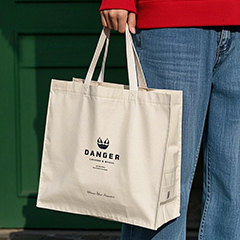
Xiangqun offers cotton foldable bags with long cotton handles and an open-top structure. Other cotton bag designs in its range include contrast-color handles, woven text handles, reinforced bottoms, and front pockets. These details can be selected according to the buyer’s packaging concept.
For procurement teams, handle width, attachment points, stitching density, and reinforcement should be confirmed during sample approval. A bag designed for lightweight promotional materials may not require the same construction as one intended for books, clothing, or retail merchandise. The body, handles, and bottom should be reviewed as one complete structure.
Printing And Custom Branding
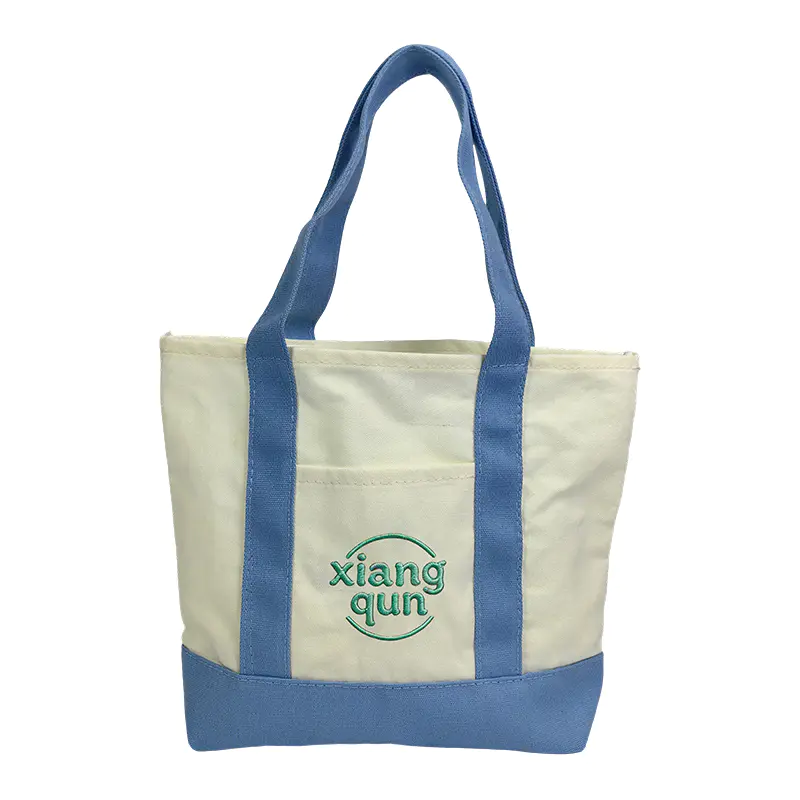
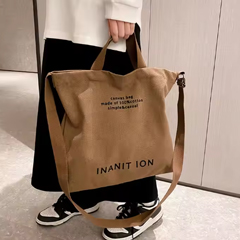
The broad fabric surface of a cotton foldable bag provides space for logos, typography, illustrations, and campaign graphics. Xiangqun’s cotton foldable bag with custom typography printing uses a natural body color, a soft foldable structure, long cotton handles, and screen printing or heat transfer printing.
The company also offers other customization methods across its cotton bag range, including digital printing, embroidery, and woven labels. The appropriate method depends on the artwork, color requirements, fabric surface, and order specifications.
Screen printing may suit simple logos and typography, while heat transfer can support selected graphic designs. Embroidery adds a raised surface effect but may be more suitable for smaller logos or specific fabric structures. Buyers should confirm print placement, print size, color references, and artwork files before production.
Applications In Retail And Promotional Packaging
A cotton foldable bag can serve several B2B packaging purposes. Retail stores may use it as a reusable checkout bag, while brands can include it in merchandise collections, event packages, or gift programs. Bookstores, boutiques, cosmetics brands, and gift shops can also use custom cotton bags to combine product packaging with brand presentation.
The foldable structure is useful when bags must be transported in bulk or distributed at events. Empty bags can be packed more efficiently than rigid packaging, while the reusable fabric body gives the recipient a reason to keep the bag after the original purchase or campaign.
The open-top design shown in Xiangqun’s cotton foldable bag is suitable for products that do not require a zipper or other closure. For items needing additional protection, buyers may consider alternative cotton bag structures with zippered tops, pockets, or reinforced bottoms.
Custom Production And Quality Inspection
The production of a cotton foldable bag involves fabric cutting, sewing, handle attachment, printing, reinforcement, inspection, and packaging. Each stage affects the final dimensions and appearance. Accurate cutting helps maintain consistent body size, while sewing quality influences the shape and durability of the finished bag.
A cotton foldable bag offers a practical combination of compact storage, reusable fabric construction, and customizable branding. By selecting the appropriate material, handle structure, printing method, and production specifications, buyers can develop packaging suited to retail, promotional, gift, and merchandise programs.
Recommended Products