English
 русский
 Español


Product Category
- Non Woven Bags
- Cotton & Canvas Bags
- Garment Bag
- Drawstring Bag & Backpacks
-
Foldable Polyester Shopping Bag
- Laundry Bags
-
Bedding Storage Bags
- Cooler Bags
- PVC Bag
-
Duffel Bag
- Aprons
-
Jute Tote Bag
-
Paper Bag
Contatc Us
Garment Bag
Wenzhou Xiangqun Bags Co, Ltd. is a professional custom garment bag manufacturer, providing high-quality OEM/ODM garment packaging solutions for clothing manufacturers, brands, retailers, wholesalers, dry-cleaning companies, and logistics suppliers worldwide.
Garment bags are designed to protect clothing from dust, moisture, and damage during production, storage, transportation, and retail display. Wenzhou Xiangqun Bags Co, Ltd. offers PE plastic bags, non woven garment bags, and PP woven storage bags with customized options for different garment types, protection requirements, and purchasing budgets.
With experienced manufacturing capabilities,Wenzhou Xiangqun Bags Co, Ltd. supports customization of bag size, material thickness, opening style, printing, logo, and packaging. From sample development and confirmation to bulk production, we provide stable production support and reliable delivery schedules for global customers.

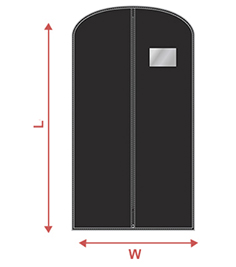 |
CM(Width * Length) | INCHES(Width * Length) |
| 60 * 110 cm | 24" * 36" | |
| 60 * 120 cm | 24" * 48" | |
| 60 * 130 cm | 24" * 52" | |
| 60 * 150 cm | 24" * 60" | |
| 60 * 170 cm | 24" * 67" | |
| 60 * 180 cm | 24" * 71" |
- Style Options
- Material Selection & Color
- Display of Printing Technology




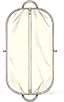


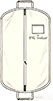

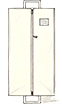
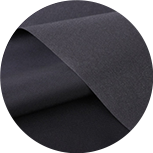 Polyester
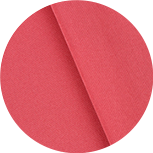 Oxford Cloth
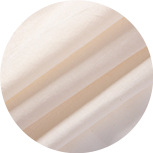 Cotton
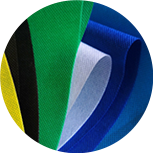 Non woven
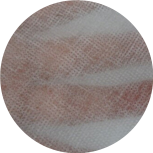 PVA Non-woven
 PEVA
PEVA Customize Color
 Laminated Color Printing
 Digital Printing
 Monochrome Printing
 Heat Transfer
 UV Digital Printing
 Screen Printing
 Gilding
 Silver Stamping
 Thermal Sublimation
Product Showcase
-
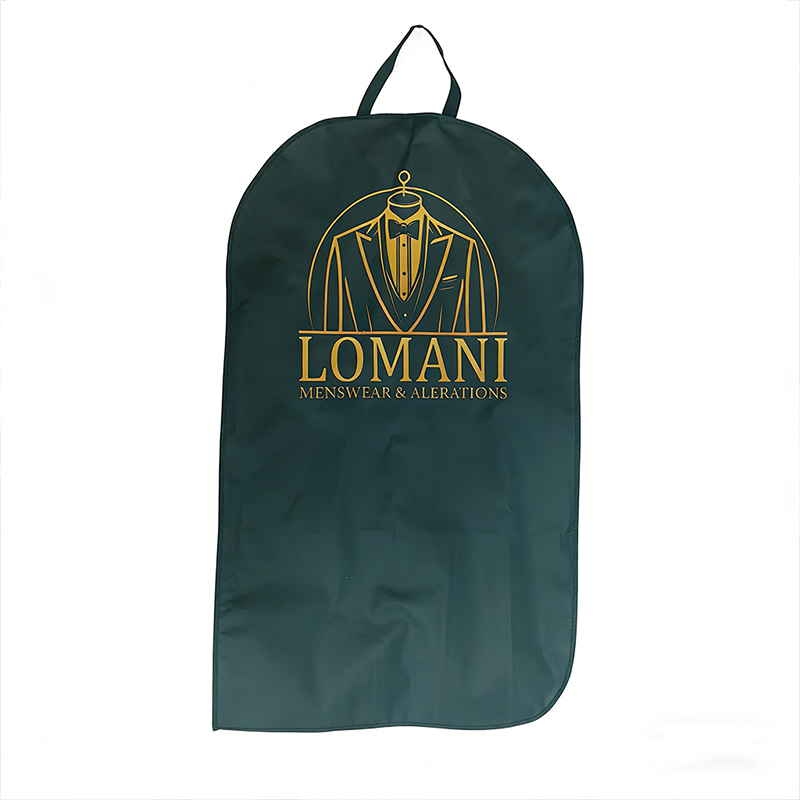
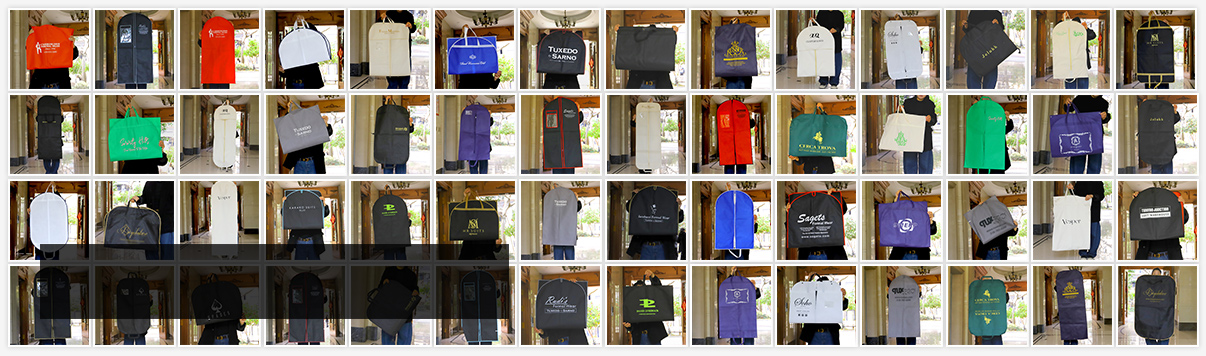
Premium Green Non Woven Suit Cover for Short and Long Garment Protection
-
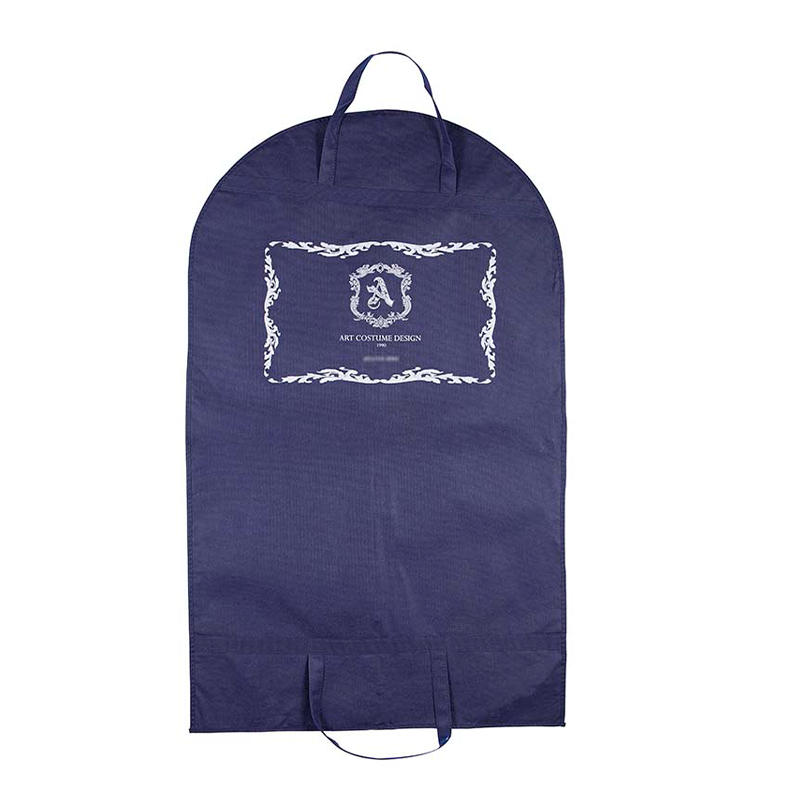
Foldable Non Woven Garment Bag with Full-Length Coverage and Handles
-
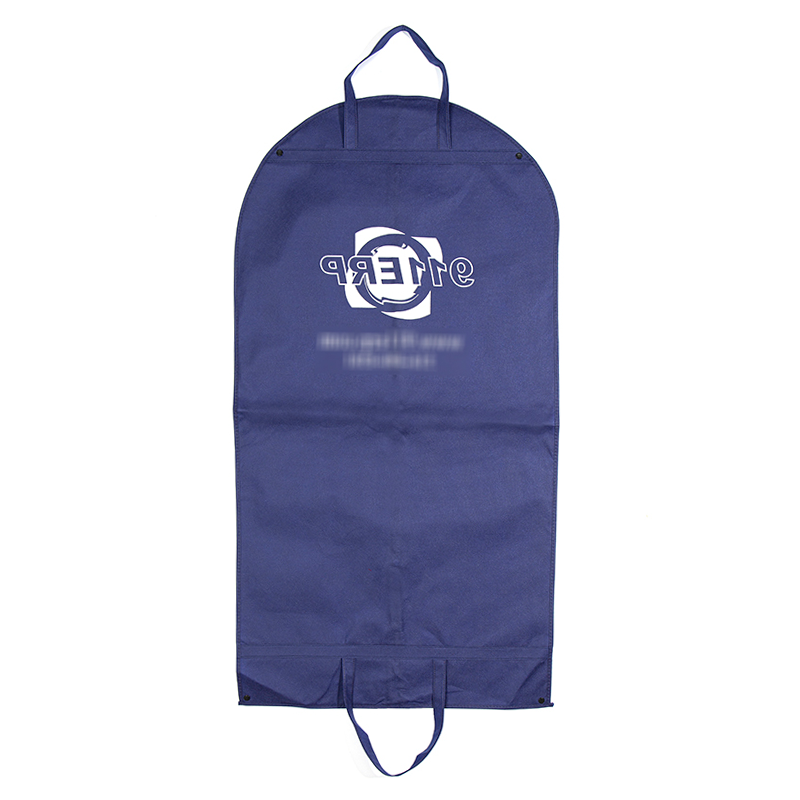
Foldable Non Woven Garment Bag with ID Window
-
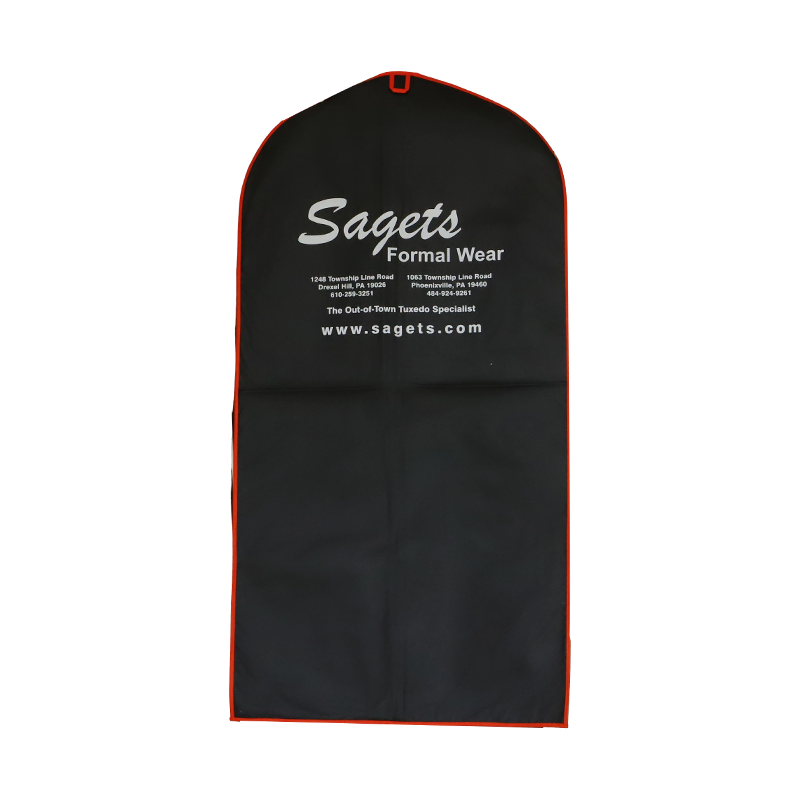
Custom Made Garment Bags with Contrast Piping and PVC Window
-
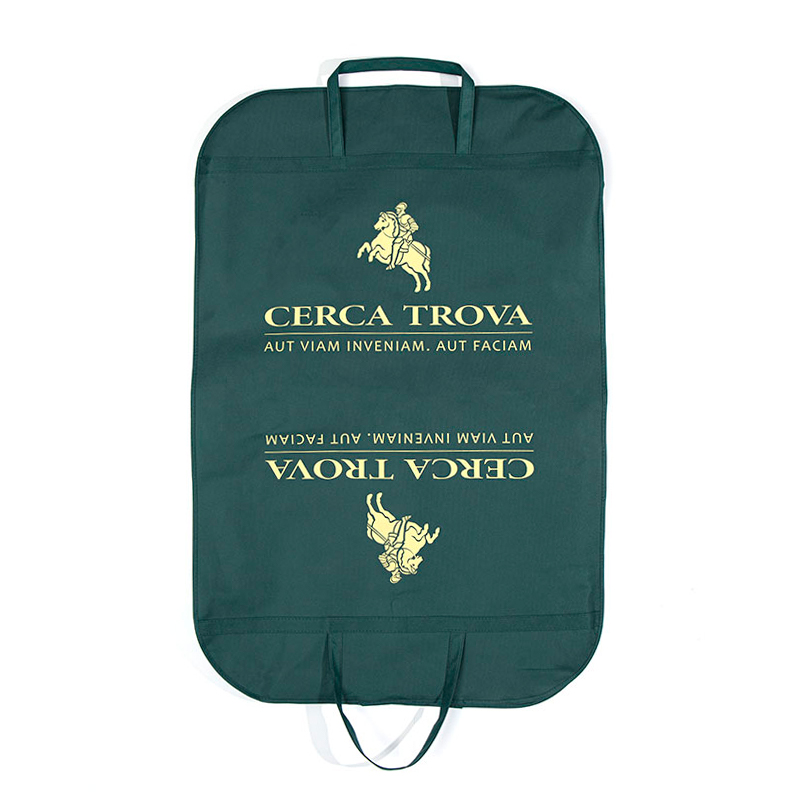
Green Garment Bag with Full-Panel Decorative Print
-
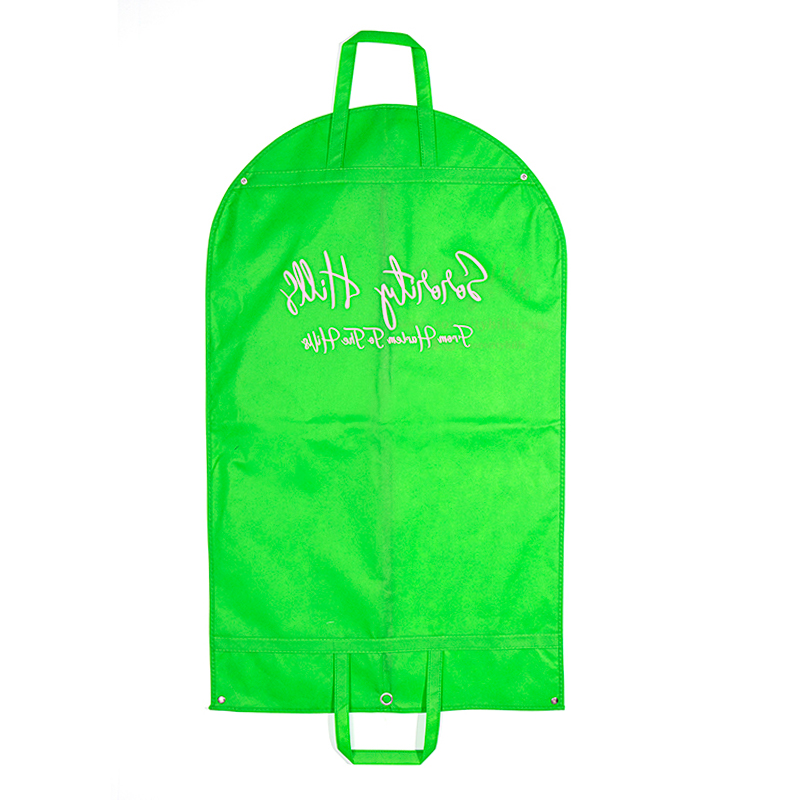
Neon Green Non Woven Garment Bag with Grommet Fold Closure
-
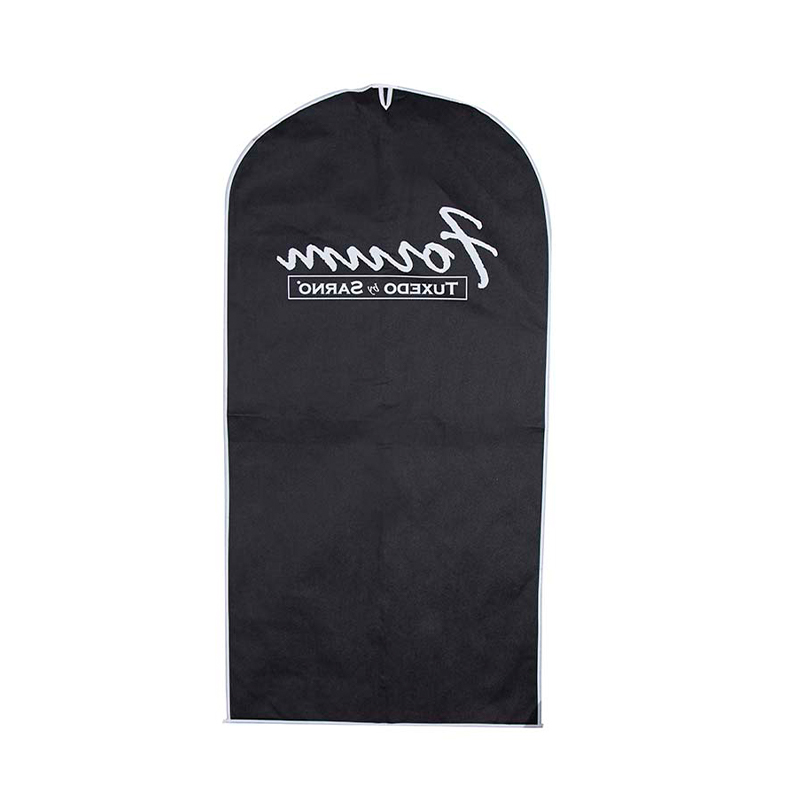
Non Woven Moth Protection Garment Bags for Closet Storage
-
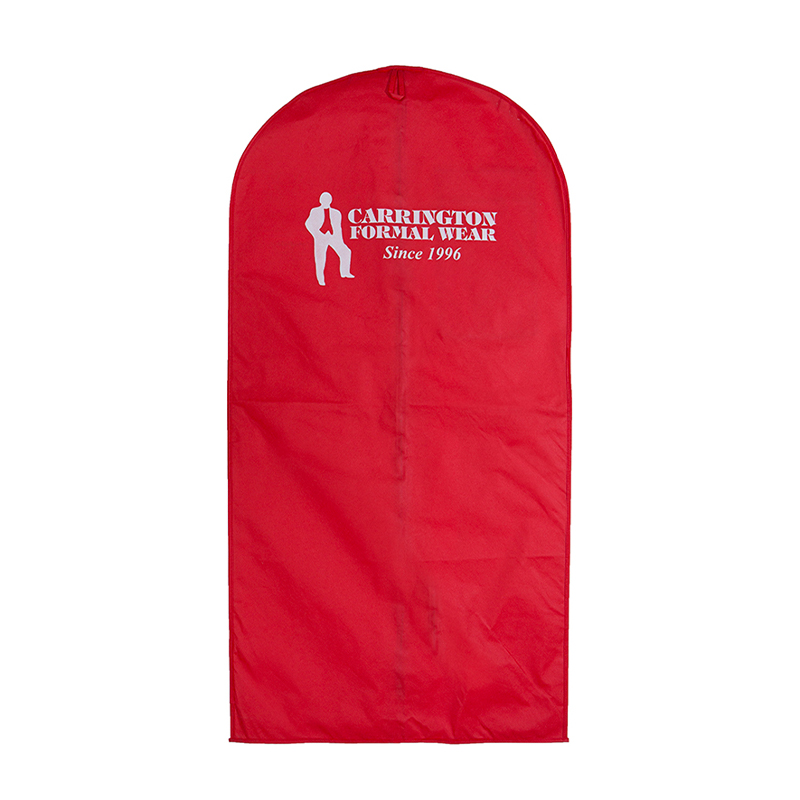
Red Rugged Garment Bag Built for Frequent Handling
-
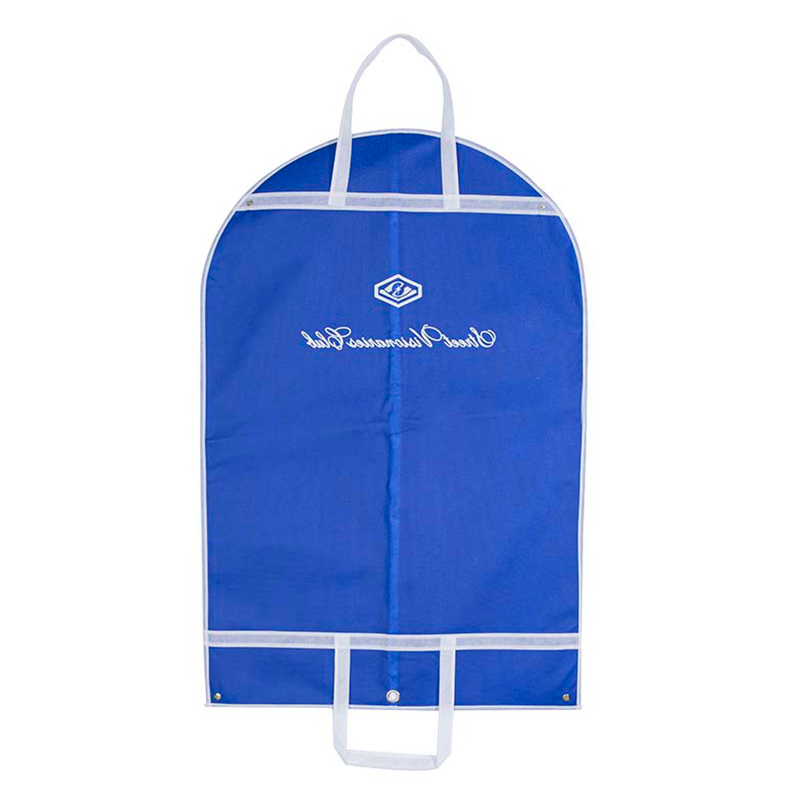
Blue Small Suit Bag with Fold-and-Snap Closure
-
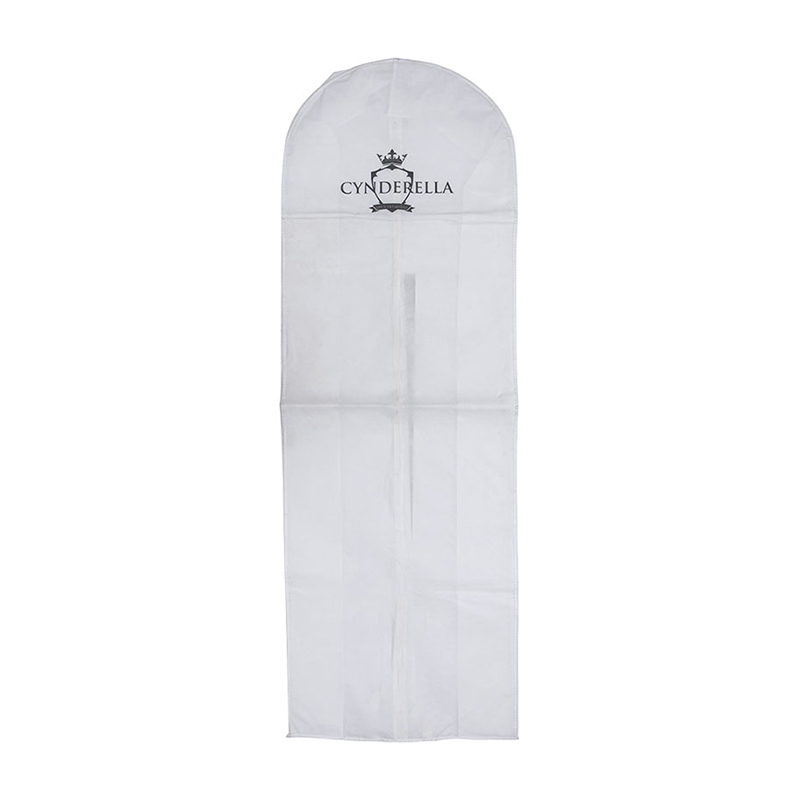
Long Coat Cover Bag with Clear PVC Front Panel
-
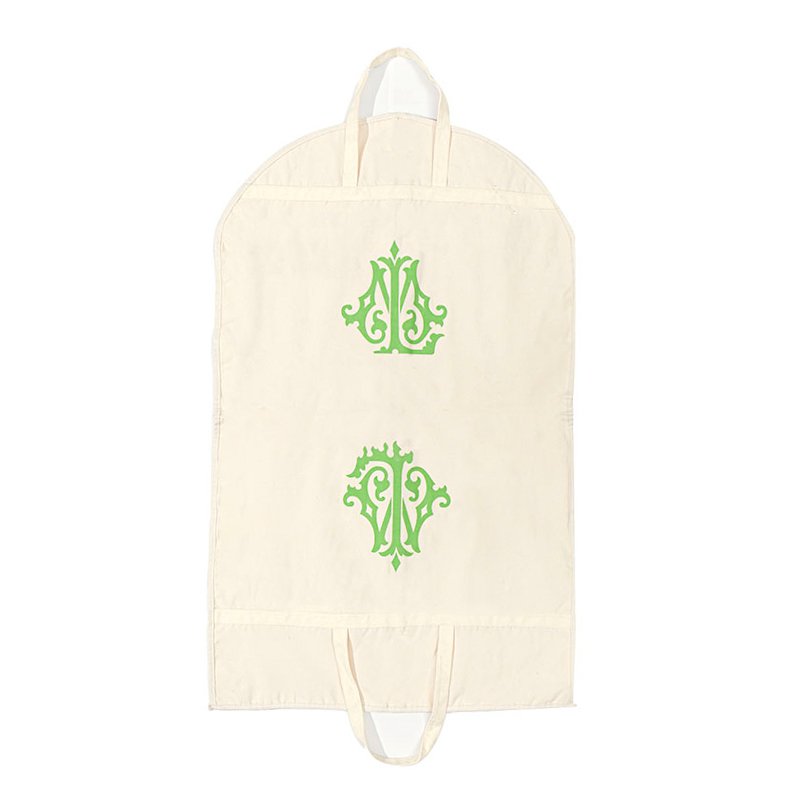
Breathable Custom Printed Cotton Garment Bag for Suits and Dresses
-
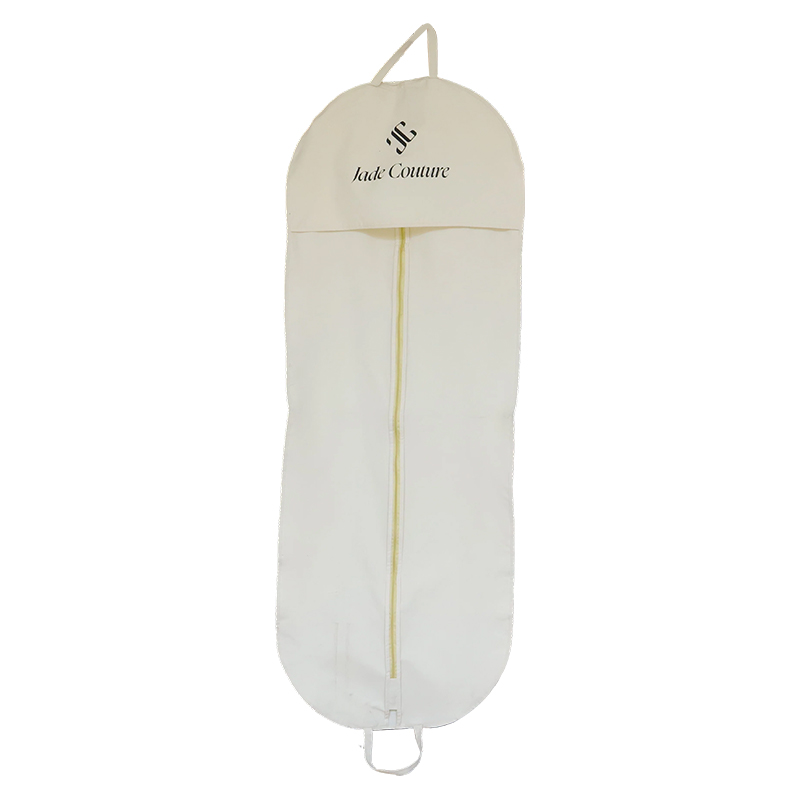
Cotton Hanging Garment Bag That Folds to Save Closet Space
Application Scenarios
Due to their flexible specifications, customizable materials, and cost-effectiveness, garment bags are widely used in the following scenarios:
-
Factory-level packaging
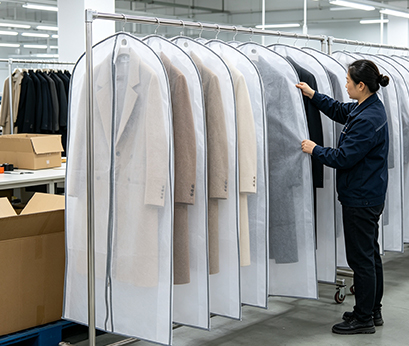
-
Wholesale & foreign trade packaging
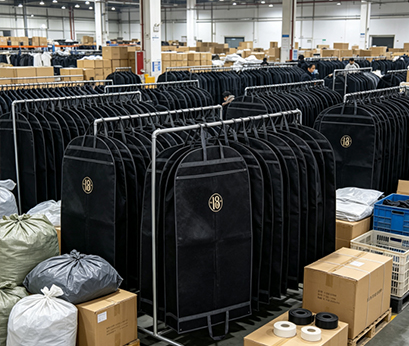
-
Retail display
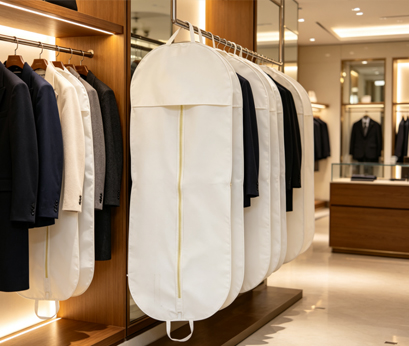
-
Dry cleaning & laundry services
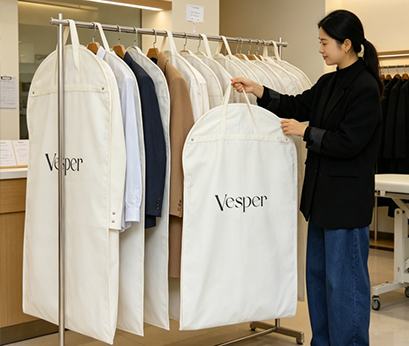
-
Seasonal storage & moving
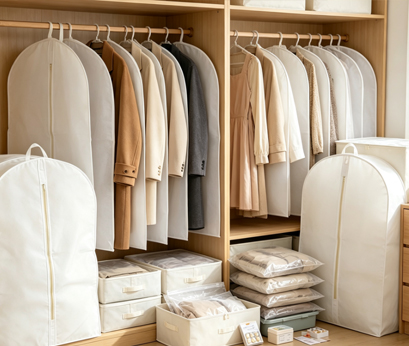
-
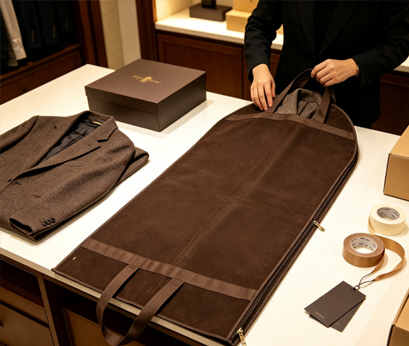
Wedding gowns & haute couture
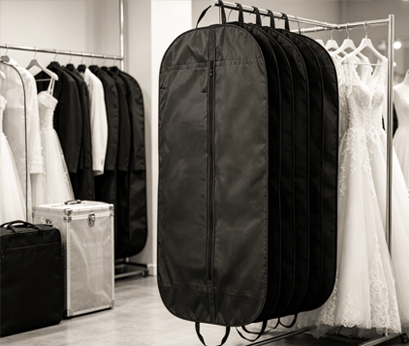
-
Branding and gift packaging
-
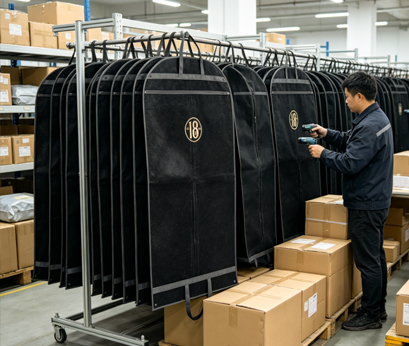
Logistics & warehousing
Why Choose Garment Bag
For B2B buyers—including garment manufacturers, brands, foreign trade companies, dry-cleaning chains, and packaging distributors—the decision to use garment bags is typically based on the following considerations:
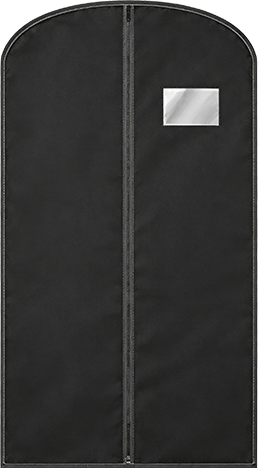
- Preserving fabric quality and reducing loss costs Dust-proof and moisture-resistant packaging effectively minimizes damage—such as fading, mold, or deformation—caused by dust and humidity during storage and transport, thereby indirectly lowering return and exchange rates.
- Flexible material selection based on budget and usage scenarios Options range from low-cost PE film bags to mid-to-high-end non-woven dust covers. materials can be matched to the garment's unit price, usage cycle, and required level of protection, balancing cost-efficiency with protective performance.
- Extensive customization for various garment types Dimensions (length and width) and opening styles (zipper, side opening, or top opening) can be tailored to specific garment categories, such as suits, dresses, coats, and wedding gowns.
- Brand image enhancement through printing Both non-woven and PE materials support logo printing, allowing the garment bag itself to serve as a vehicle for brand communication—particularly during dry-cleaning services or retail delivery, where it directly reaches the end consumer.
- Significant cost advantages in bulk procurement Garment bag manufacturing is a mature process with stable raw material supplies. bulk purchasing offers substantial economies of scale, making it ideal for the long-term, steady consumable procurement needs of garment factories and brands.
- Mature supply chain and reliable lead times Garment bags are an established packaging product within the apparel industry cluster. stable raw material sourcing and production processes ensure reliable delivery schedules for bulk orders.
OEM/ODM Capabilities
We support the following customization models and welcome inquiries from garment factories, brands, traders, and dry-cleaning chains regarding specific requirements and solution assessments:
- OEM (Private Label) Production: Exclusive custom production based on client-provided specifications for logos, color schemes, and dimensions;
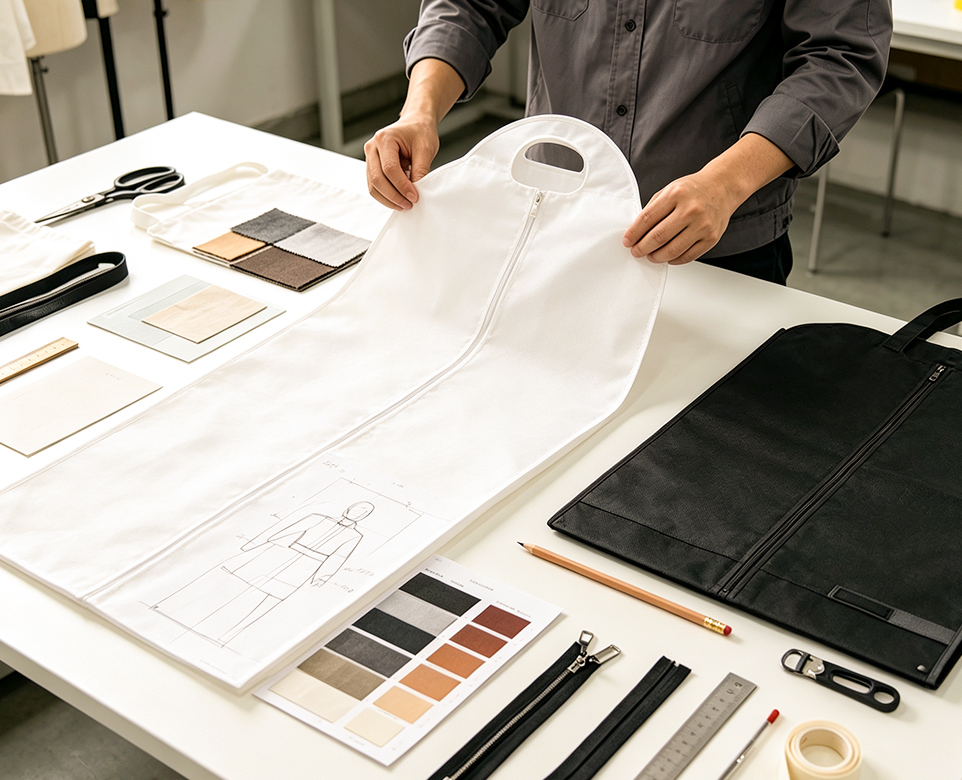
- ODM (Joint Development): If clients only have a general idea of the garment category and usage scenario, our team can assist by proposing combinations of bag structures, material thicknesses, and opening styles;
- Multiple Material Options: Support for combining materials such as PE, non-woven fabric, and PP woven fabric to meet various protection levels and budget requirements;
- Packaging Customization: Support for custom branding on outer cartons, inner packaging, hangtags, and instruction cards;
- Sample Prototyping Service: New clients can request small-batch samples to verify material feel, size fit, and print quality before proceeding to mass production;
- Mixed-Specification Ordering: Suitable for garment factories and brands needing to order multiple sizes, materials, or patterns in a single batch (specific minimum order quantities and mixed-order rules are subject to confirmation during business discussions).
Frequently Asked Questions
-
What is your minimum order quantity?
The minimum order quantity starts from 100 pieces. The exact MOQ may vary depending on the product size, material, printing and customization requirements.
-
How long is the production lead time?
The standard production lead time is approximately 7–15 days after the sample and order details are confirmed. The exact delivery time depends on the order quantity and customization requirements.
-
Do you provide design services?
Yes. We provide free design support, including logo placement, printing layout and basic product artwork adjustments according to your requirements.
-
Can you provide a sample before bulk production?
Yes. We provide free sample making so you can confirm the material, size, color, printing and workmanship before mass production.
-
Can I customize the logo, color, size and packaging?
Yes. We support OEM and ODM customization, including product size, material, color, logo printing, handle style, accessories and packaging.
-
How do you control product quality?
Every order undergoes strict quality inspection before shipment. Our QC team checks the material, dimensions, printing, stitching, accessories, quantity and packaging to ensure the products meet the confirmed requirements.