English
 русский
 Español



How to Specify Non Woven Wine Bags for Bulk Orders?
2026-10-09
Wine packaging buyers often need a carrying bag that does more than display a logo. Bottle weight, compartment layout, handle construction, and bottom reinforcement all affect how the finished packaging performs during retail sales, gifting, and transport. When placing a bulk order, defining these details before production can help manufacturers quote the correct structure instead of treating the product as a standard shopping bag.
For wineries, beverage retailers, gift companies, and promotional suppliers, Non Woven Wine Bags offer a flexible packaging format that can be configured around different bottle quantities and branding requirements. Wenzhou Xiangqun Bags Co., Ltd. manufactures customized bags and supports structural, material, printing, and packaging adjustments for this product category.
Start With Bottle Capacity
The number of bottles is one of the first specifications a buyer should provide. Xiangqun's wine bag range includes single-bottle, two-bottle, four-bottle, and six-bottle configurations, with other compartment arrangements available according to project requirements.
A single-bottle bag may suit winery retail counters, corporate gifts, or individual bottle purchases. Multi-bottle formats can serve wine retailers, promotional campaigns, and gift sets where several bottles need to remain separated inside one carrier.
For Non Woven Wine Bags, the internal divider structure should be considered together with bottle dimensions. Standard wine bottles can differ in height, diameter, and shoulder shape. Buyers should provide actual bottle measurements when a custom compartment is required rather than relying only on a nominal bottle count.
Check the Bag Structure Before Printing
Branding attracts attention, but structural details determine how the bag handles the packaged product. A reinforced base supports the load transferred from the bottles to the bottom of the bag. Internal dividers can separate bottles and reduce direct contact during carrying.
Xiangqun lists reinforced bottoms and bottle-separating compartments among the structural options for its wine bags. The company also supports reinforced double handles and other construction choices depending on the requested design.
|
Procurement Detail |
Why It Matters for Wine Bags |
Information to Give the Factory |
|
Bottle quantity |
Determines compartment layout and overall dimensions |
1, 2, 4, 6, or custom count |
|
Bottle dimensions |
Affects fit and divider spacing |
Height, diameter, bottle shape |
|
Bottom structure |
Carries the combined bottle load |
Reinforced or standard base |
|
Handle design |
Affects carrying comfort and load distribution |
Rope, tape, reinforced handle, etc. |
|
Printing area |
Determines logo placement and artwork size |
Front, back, side, or full coverage |
|
Packaging |
Affects warehouse handling and shipment |
Carton quantity and labeling |
This specification process gives buyers a clearer basis for comparing quotations from different bag manufacturers.
Select the Material for the Intended Use
Non-woven fabric provides a lightweight textile-based alternative to rigid wine boxes and other packaging formats. Xiangqun's material options include non-woven fabric as well as polyester, PVC, RPET, cotton, jute, PU, mesh, laminated materials, and paper across its wider bag manufacturing range.
For a wine bag project, the material decision should follow the intended application. A retail carrier may prioritize cost, print coverage, and handling. A gift packaging project may place greater emphasis on fabric appearance, color, handle construction, and finishing details.
Buyers should also confirm fabric color and weight during sampling. These factors can affect the visual appearance of printed artwork and the overall structure of the finished bag.
Match Printing to the Brand Design
Non Woven Wine Bags can carry branding through several printing and finishing processes. Xiangqun lists laminated color printing, digital printing, monochrome printing, heat transfer, UV digital printing, screen printing, gilding, silver stamping, and thermal sublimation among its available processes.
The appropriate process depends on the artwork, number of colors, coverage area, material, and required appearance. A buyer supplying a corporate logo should provide the artwork file together with the preferred color references and print position.
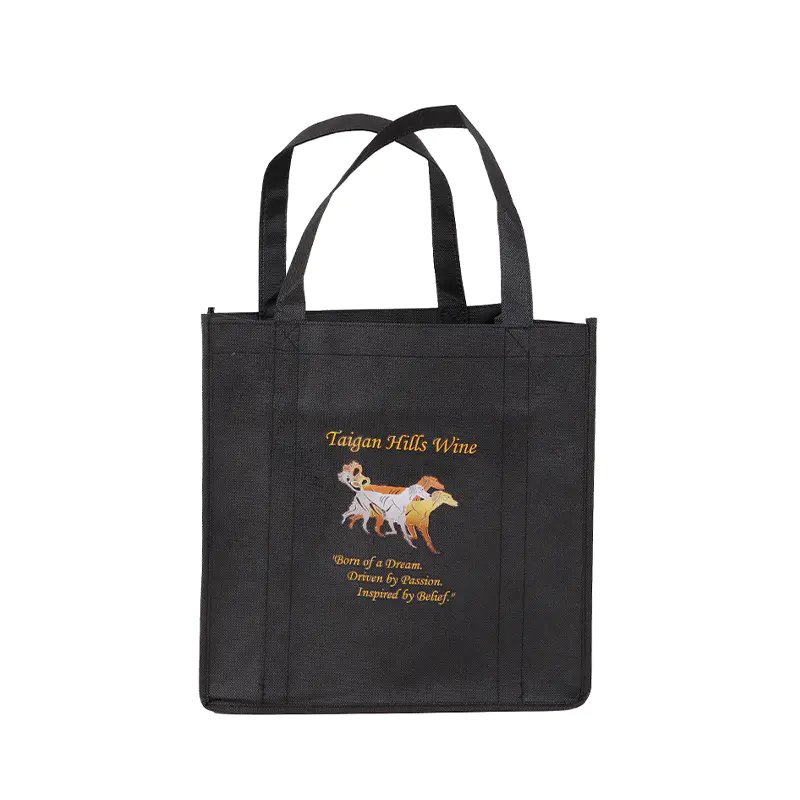
Sampling is useful when the project contains detailed graphics or requires a specific color result. Xiangqun states that sample production is available before bulk production so buyers can check material, size, color, printing, and workmanship.
Plan MOQ and Bulk Production
MOQ is another practical point for importers and distributors. Xiangqun lists a starting MOQ of 10000 pieces, with the actual requirement varying according to size, material, printing, and customization. Standard production lead time is approximately 7–15 days after sample and order details are confirmed.
For larger purchasing programs, buyers should confirm whether different bottle capacities, colors, or artwork versions can be combined within one order. The company states that mixed-specification orders can be supported, subject to MOQ and batch terms.
Quality Checks Before Shipment
For Non Woven Wine Bags, quality inspection should cover more than printing appearance. Xiangqun states that its QC process checks material, dimensions, printing, stitching, accessories, quantity, and packaging before shipment.
For a customized wine bag order, buyers can also use pre-production samples to confirm the bottle fit, divider position, handle attachment, base construction, and logo placement. These checks give both the buyer and manufacturer a confirmed reference before bulk production starts.
Xiangqun provides OEM and ODM services for Non Woven Wine Bags, including size, material, color, logo, handle style, accessories, and packaging customization. For wineries, retailers, and promotional suppliers, defining these specifications at the quotation stage gives the factory a clear production brief and provides a practical basis for repeat orders.
Recommended Products