English
 русский
 Español



What Makes a Linen Apron With Pockets Worth Stocking?
2026-07-10
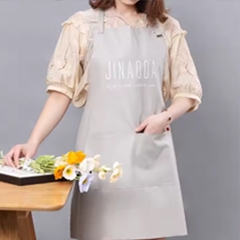
Promotional product distributors reviewing new catalog additions keep asking a practical sourcing question: what separates a linen apron with pockets that holds up through months of kitchen or retail use from one that frays at the seams after a handful of washes? Buyers supplying corporate gifting programs and hospitality clients increasingly trace the answer to fabric weight, pocket construction, and how well a factory handles logo customization without weakening the base garment.
Fabric Weight and Linen Blend Choices
Pure linen offers a natural texture buyers associate with premium kitchen and hospitality goods, but 100 percent linen wrinkles quickly and costs more per yard than blended alternatives. Many factories producing a linen apron with pockets for the promotional market use a linen-cotton blend instead, balancing the natural drape of linen against the wrinkle resistance and lower cost that cotton contributes to the fabric. Blend ratio matters here: a fabric leaning too heavily toward cotton loses the visual texture buyers pay a premium for, while one leaning too far toward linen sacrifices the easy-care properties bulk institutional buyers expect.
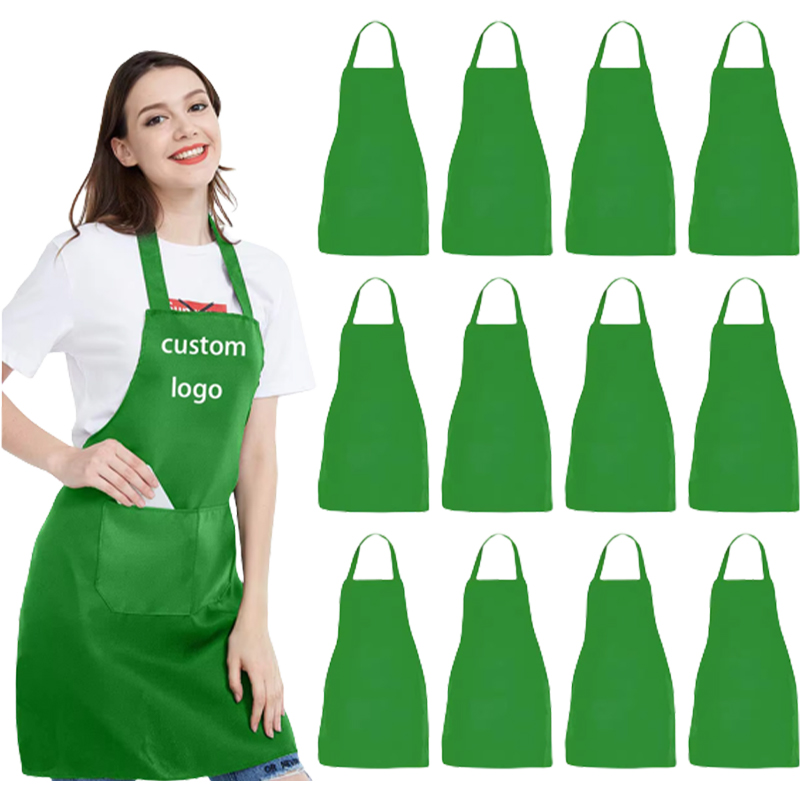
Fabric weight, measured in grams per square meter, shapes durability as much as fiber content does. Lighter weights under 200 GSM drape well for a decorative apron meant for occasional gifting, while heavier weights above 250 GSM suit a linen apron with pockets intended for daily kitchen or barista use, where repeated washing and abrasion demand a sturdier weave.
Pocket Construction and Reinforcement Points
Pockets on this style of apron take more structural stress than several other panels, since users routinely stuff them with pens, order pads, phones, or kitchen tools well beyond what a pocket seam was originally sewn to hold. Factories building a linen apron with pockets for commercial use increasingly reinforce pocket corners with bar tacking or double-stitched seams, since a single-stitch pocket edge tends to split within weeks of daily use in a busy kitchen or retail counter environment.
|
Apron Feature |
Buyer Concern |
Common Standard |
|
Fabric blend |
Texture vs. wrinkle resistance |
55/45 linen-cotton blend |
|
Fabric weight |
Durability for daily use |
200 to 280 GSM |
|
Pocket reinforcement |
Seam failure under load |
Bar tacking, double stitching |
|
Neck strap adjustment |
Fit across body sizes |
Metal slide buckle or D-ring |
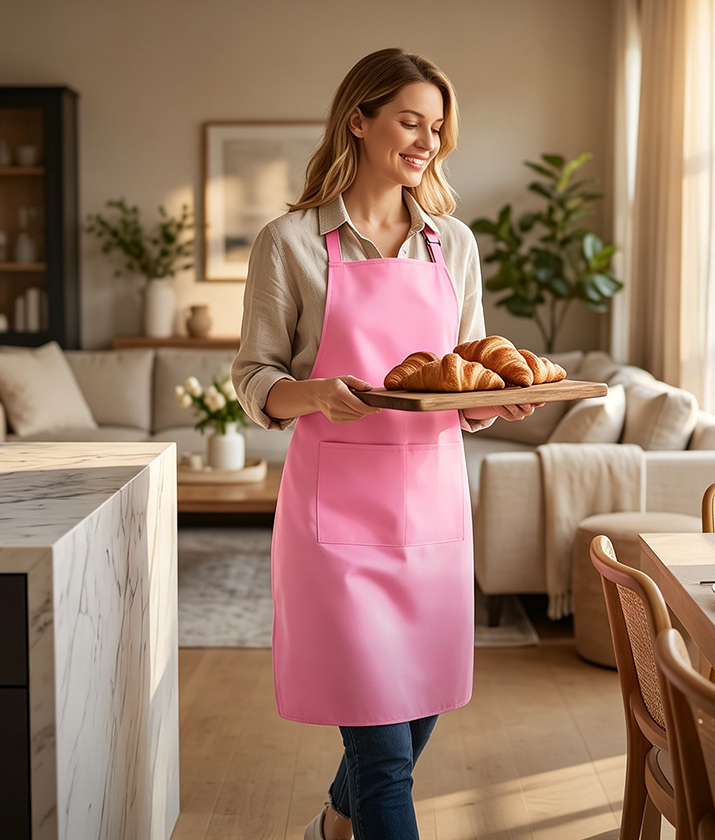
Pocket depth and placement also draw attention from buyers sourcing for specific trades. A barista apron benefits from a shallow chest pocket sized for a notepad and pen, while a kitchen-focused style typically needs a deeper waist pocket that can hold a kitchen towel without sagging against the body during service.
Logo Customization Without Compromising the Fabric
Embroidery and screen printing pull a linen blend fabric in different directions during the decoration process. Embroidery needle penetration on a loosely woven linen blend can distort the surrounding weave if stabilizer backing gets skipped, leaving a slightly puckered logo area that stands out against the flat drape of the rest of the apron. Screen printing avoids this mechanical stress but requires ink formulated for natural fiber blends, since standard plastisol ink can crack over repeated washing on a fabric that flexes differently than polyester-heavy promotional textiles.
Buyers ordering a bib apron style for large corporate programs increasingly request wash-test samples showing the decorated logo after twenty or more laundry cycles, since a distorted or faded logo after a short service life undercuts the entire branding purpose the apron was ordered for.
Sourcing Considerations for Bulk Programs
Minimum order quantities for a linen apron with pockets typically scale with color and size combinations rather than applying as one blanket figure, since dye lot consistency across a large order requires enough volume per color to justify a dedicated dye run. Buyers new to sourcing promotional apron programs sometimes underestimate how color matching works across repeat orders placed months apart, where a factory without documented dye formulas can deliver a noticeably different shade on a reorder compared to an original batch.
CNXQ Bag, working within this category, structures its linen apron with pockets production around documented fabric blend ratios, reinforced pocket stitching, and wash-tested decoration methods, giving promotional product distributors a sourcing reference built on tested durability rather than a styling photo alone.
Recommended Products