English
 русский
 Español







Breathable Duvet Storage Bags Depend On The Fabric Itself
2026-09-25
A duvet packed with down or synthetic fill is an organic, moisture-sensitive product even after it comes out of the wash, and sealing it inside an airtight material for weeks or months creates exactly the environment mildew and musty odors need to take hold. Breathable Duvet Storage Bags solve this at the material level, not through any added feature, since the fabric itself either lets trapped moisture escape or keeps it locked in against the stored bedding. That distinction sits underneath every material choice a manufacturer makes for Breathable Duvet Storage Bags, from the main body fabric down to whichever accent trim or panel gets added for visual detail.
Non-Woven Fabric Lets Stored Bedding Actually Breathe
Non-woven fabric is made from bonded fibers with countless microscopic gaps running through the material, which lets air and residual moisture pass through the bag wall gradually rather than accumulating inside a sealed pocket. Breathable Duvet Storage Bags built primarily from non-woven fabric take advantage of this structure to let a duvet continue releasing whatever moisture it retained from washing or humid storage conditions, reducing the musty smell and mildew risk that shows up when bedding sits compressed and sealed for an extended stretch. That same porous structure also makes non-woven fabric noticeably lighter than a solid PVC or vinyl equivalent, which matters when the finished bag already carries a heavy duvet load on top of its own material weight. Development work on Breathable Duvet Storage Bags in this material typically focuses on fiber density, balancing enough structure to resist tearing against keeping the weave open enough for airflow to still pass through. A denser non-woven blend adds durability but narrows those airflow gaps, so getting this balance right takes testing across a few fiber weights rather than settling on a single density for every product in the line.
Clear PVC Panels Trade Breathability For Visibility
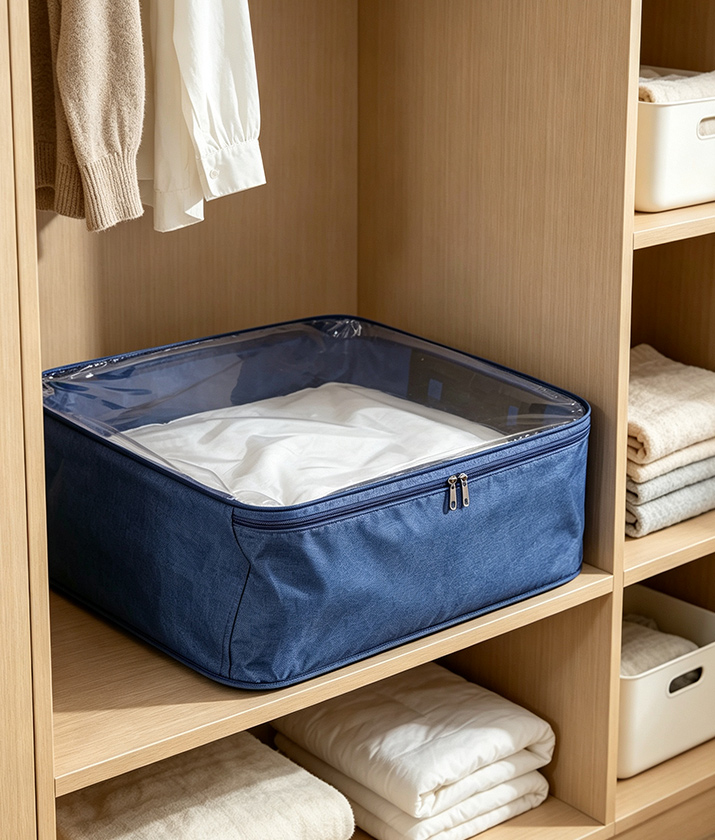
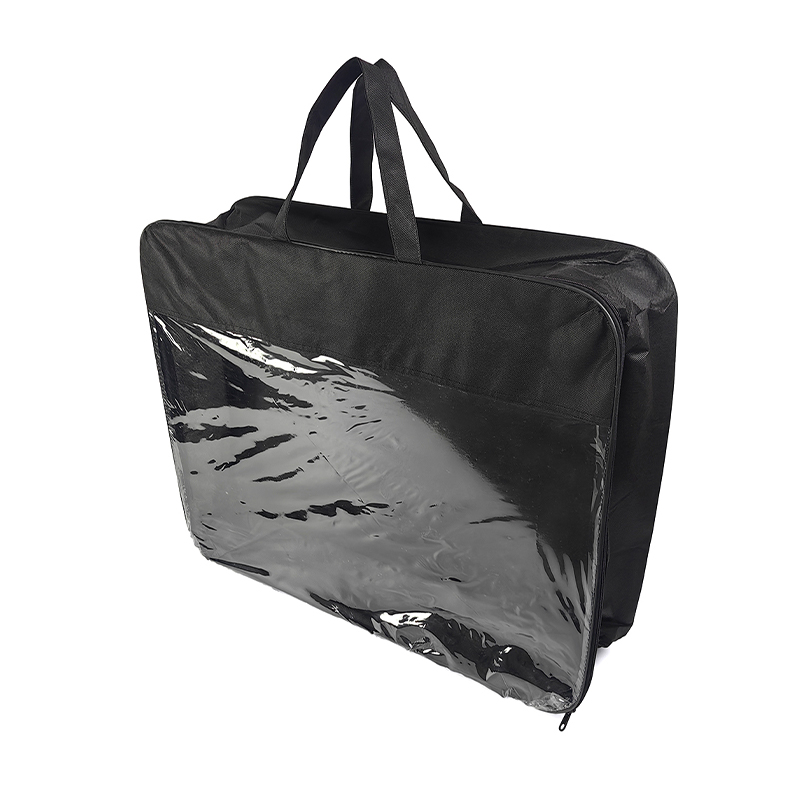
A large clear PVC window lets a customer see exactly which duvet or bedding set is inside without opening the bag, which is a real convenience for anyone storing several bags on the same shelf. That convenience comes at a direct cost to airflow, though, since PVC forms a solid, non-porous barrier wherever it covers the bag's surface. Breathable Duvet Storage Bags that still want a clear viewing panel typically limit the PVC to one face of the bag, keeping the surrounding panels in non-woven or Oxford fabric so the majority of the bag surface still allows moisture to pass through even while one panel stays sealed for visibility. Panel placement on Breathable Duvet Storage Bags matters here too, since a PVC window positioned on a side panel rather than the base keeps the sealed section away from where the heaviest, densely packed section of bedding usually sits.
Oxford Fabric Offers A Middle Path Between The Two Materials
A woven Oxford fabric body paired with a PVC top panel splits the difference between the two approaches directly into one product, keeping the bulk of the bag's surface area in a tighter but still more breathable weave than solid PVC while concentrating the sealed, non-porous section to just the viewing window. Breathable Duvet Storage Bags built this way suit customers who want both the moisture management non-woven fabric provides and the at-a-glance identification a PVC window offers, accepting a smaller breathable surface area in exchange for that added visibility rather than giving up airflow across the whole bag. Stitching quality where the two materials meet gets extra attention on this construction, since that seam is both a structural joint and the boundary between a breathable zone and a sealed one.
Material choice, more than any added feature, is what determines whether Breathable Duvet Storage Bags actually protect stored bedding over months of use or simply look protective while sealing moisture inside. Matching fabric selection to how long a customer typically expects to store a duvet, and how humid their storage environment tends to be, guides which of these three material approaches fits a given product line, since a fully sealed PVC bag and a fully non-woven bag serve genuinely different storage conditions rather than one simply outperforming the other across every use case.
Recommended Products